
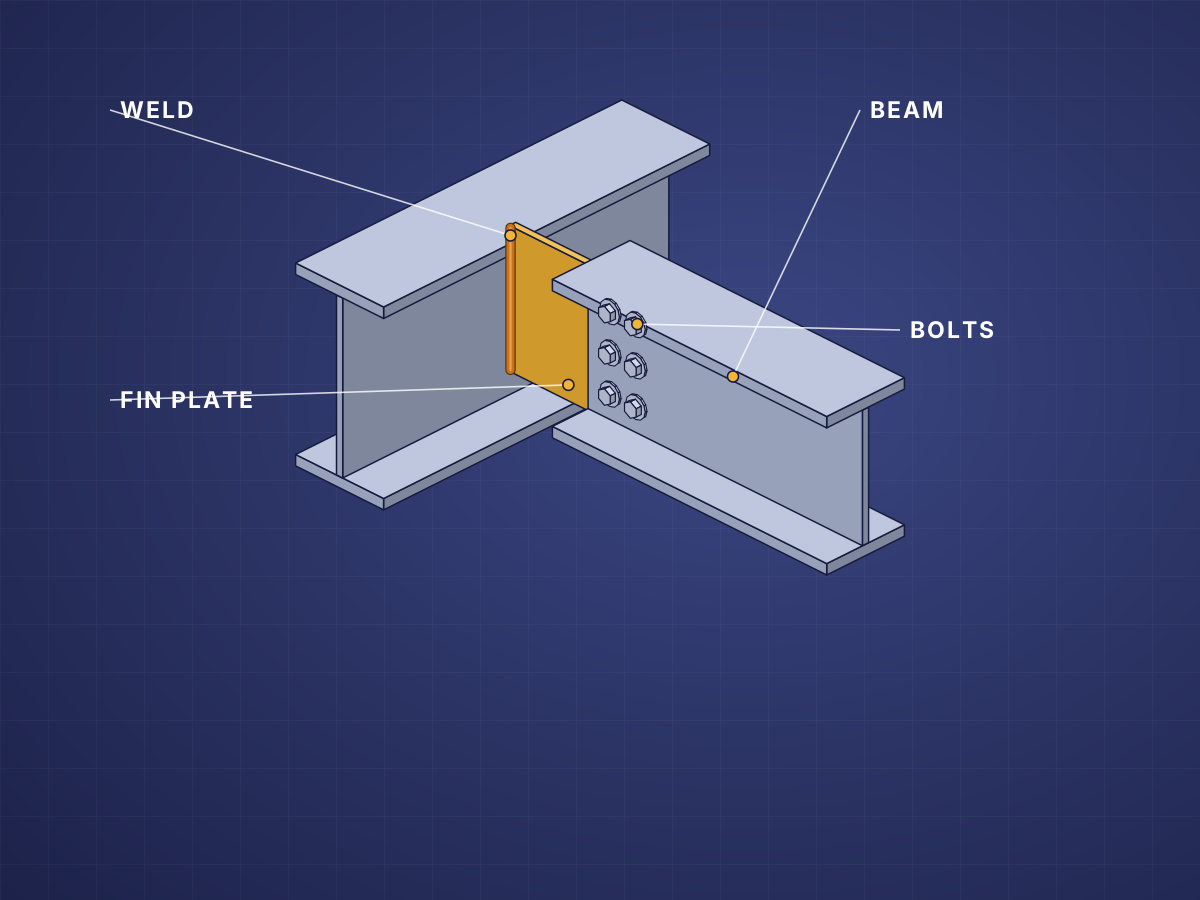
Fin plates and simple connections
Beam-to-beam and beam-to-column connections detailed around the loads, plates, fixings and access set by the structural engineer.
Used for joining beams to columns and to other beams

From the engineer's loading information to clear, buildable connection details, designed and manufactured at our Gravesend factory.
At MAH Steel, we are steel fabricators designing and manufacturing steel connections from our Gravesend steel factory using advanced CNC machinery. Our steel connection design service takes your drawings and load information and develops them into clear, buildable connection details for projects across London, Kent and the South East.
Our engineers design a full range of connections, including cranked beams, splice connections, haunches, fin plates, and end plates, working from the loading provided by the structural engineer. Because the same team handles design and structural steel fabrication, the details are drawn with the workshop and the site in mind.
For the drawings and models around these connections, see steel CAD services and 3D steel modelling.
Practical connection solutions are shaped by the loads, the steelwork arrangement and the way each part will be made and installed. Illustrative diagrams, not fabrication drawings.
Beam-to-beam and beam-to-column connections detailed around the loads, plates, fixings and access set by the structural engineer.
Used for joining beams to columns and to other beams

More demanding junctions need particular attention to member forces, geometry and approval, so end plates and haunches are detailed for the frame they belong to.
Used for frame junctions between beams and columns
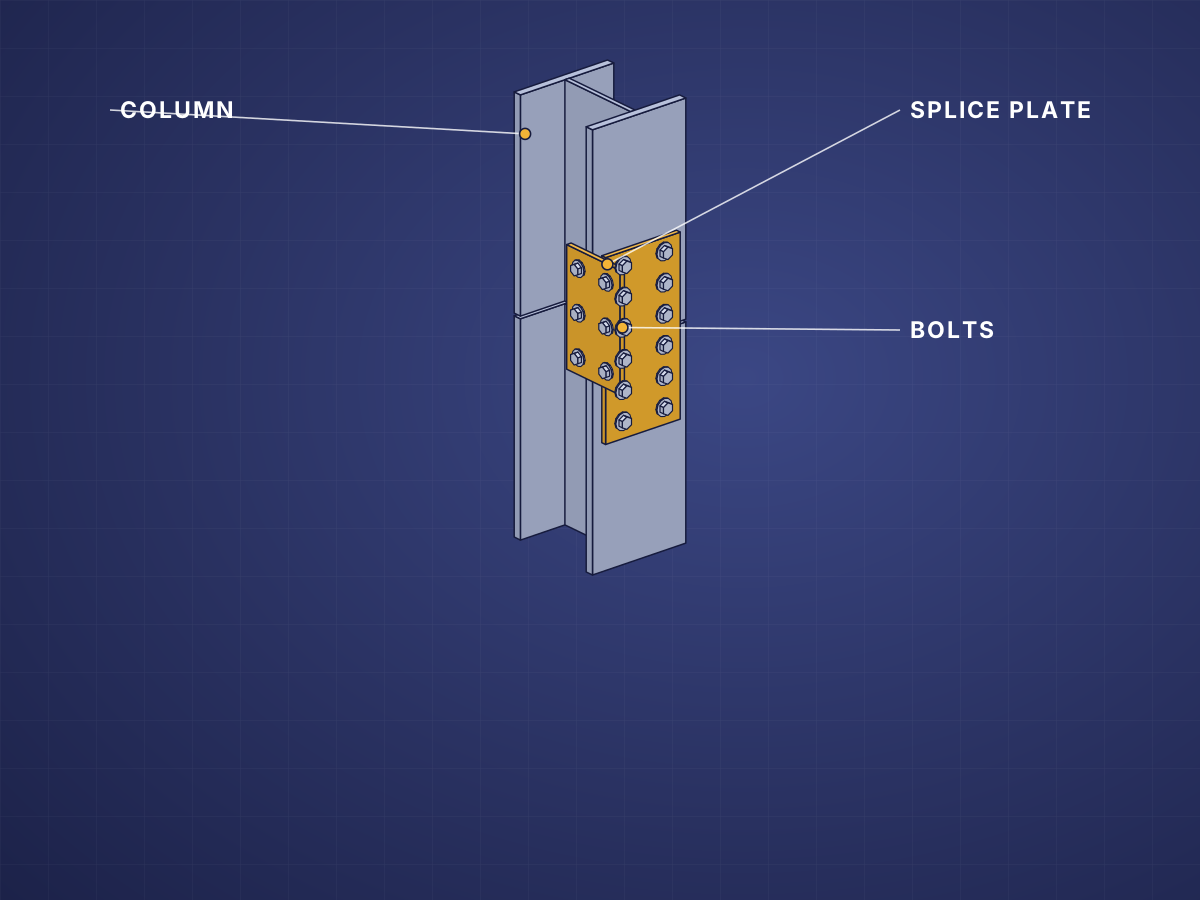
Joining lengths of beam or column with plates and bolts, so each piece can be handled, delivered and installed in the space available.
Used for steel made in lengths that can be installed
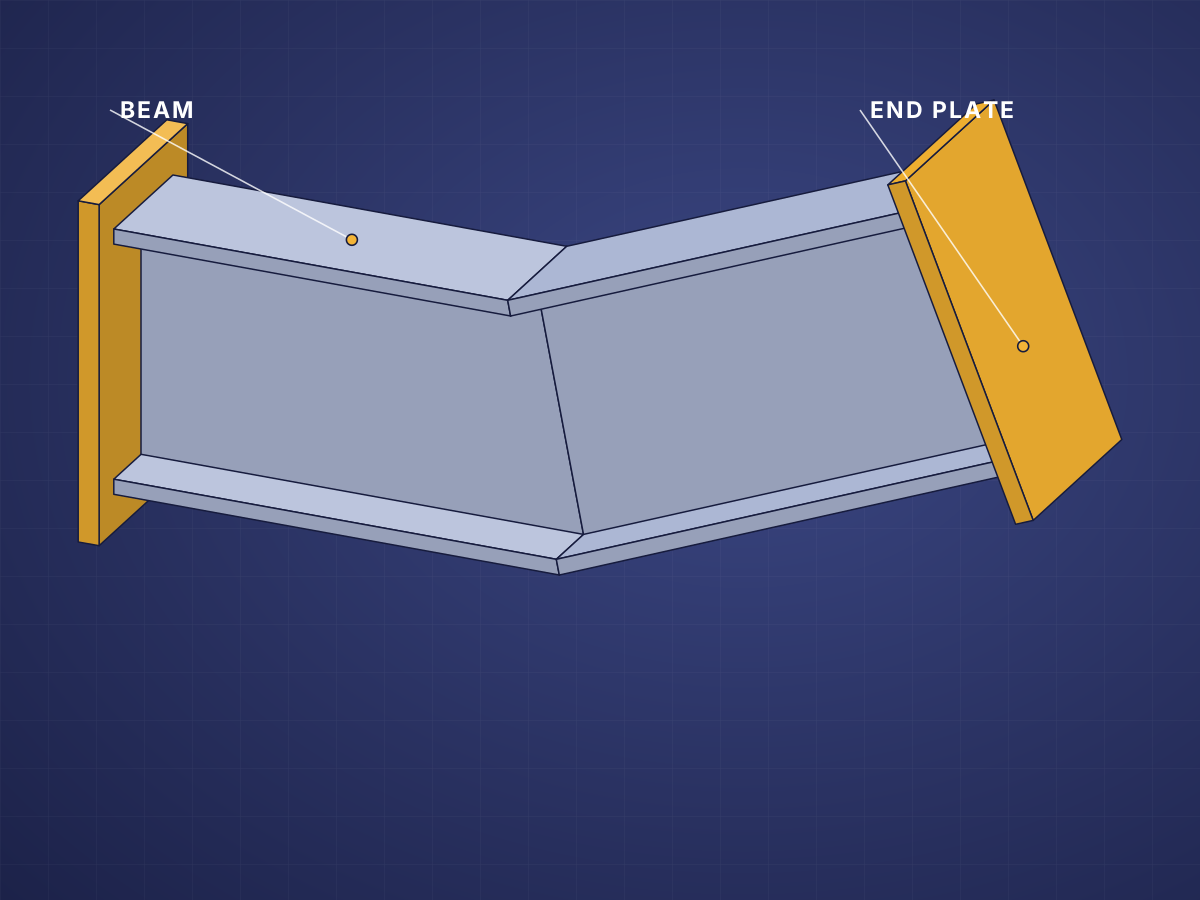
Cranked beams, preparing plates and resolving unusual interfaces so fabricated pieces can be handled and assembled on site.
Used for beams that change direction, and one-off interfaces
Each connection is a set of plates, bolts and welds that the workshop has to make and the site has to assemble.
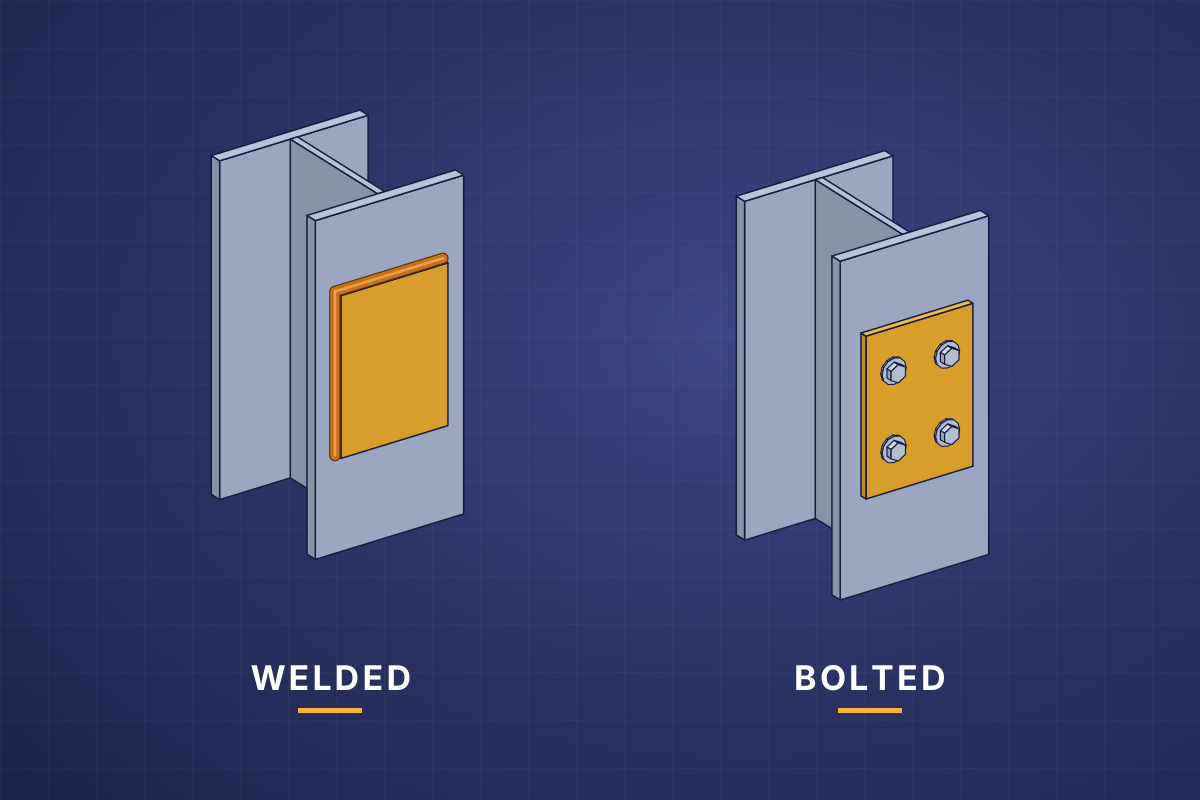
We don't just design for theory, we design for site. Our engineers specify the right connection types, bolt grades, weld sizes, and geometry to suit real loads and installation conditions, keeping things efficient and straightforward on site.
Because we handle both design and fabrication, there's no need to coordinate with multiple parties. Send us your drawings and load information, and the drawings are approved by you and your engineer before fabrication starts.
Plates, bolts and welds are chosen for the connection, then drawn so the workshop can cut, drill and weld the steelwork ready for assembly. Our guide to welded vs bolted steel connections explains how the two compare.
Properly designed connections help transfer loads correctly between beams, columns and other components, while also supporting efficient fabrication and straightforward on-site assembly.
Connection details sit between drawings, fabrication and erection, each with its own page.
 Structural steel fabricationBeams, frames and connections prepared to approved drawings.
 3D steel modellingDrawings and modelling to coordinate fabrication and connections.
 Steel CAD servicesFabrication drawings that define every plate and connection point.
 Steel connectionsThe connection types MAH fabricates, from spacer beams to splice plates.
 Steel erectionErection and installation support where agreed.
One clear process keeps the engineer's information, the drawing office and the workshop aligned before any steel is cut.
We review the structural drawings and load requirements for the project.
Connection arrangements, plates, bolt positions and welds are drawn with fabrication methods and installation conditions in mind.
We prepare the drawings, and you and your engineer approve them before fabrication starts.
The steel is cut, drilled and fabricated to the approved drawings at our Gravesend factory, ready for delivery and installation.
Published MAH projects whose own case studies describe connection design, splice details or connection details agreed before the steel was fabricated.
MAH took on the steel connection design from the loading provided by the engineer, then sent the detailed drawings to the engineers…
Two structural splices and shelving plates designed and fabricated: the positions, measurements and connection details were sketched up…
A beam spliced into three sections to suit a restricted basement, with the connection and splice details checked against the approved…
Further reading on how steel connections are designed, chosen and fabricated.
Steel connections play a crucial - though often overlooked - role in…
When it comes to steel construction, the choice of connection plays a…
Fabricated steel connections stand as an indispensable element in…
This section covers key information about our steel connection design services, including how connection details are engineered, analysed, and integrated into wider structural frameworks. It addresses common topics such as design methodology, fabrication considerations, installation interfaces, and overall structural performance, helping you understand how robust and efficient connection designs are developed for steel projects.
Steel connection design begins by reviewing the structural drawings and load requirements for the project. Our team then designs the necessary connections to ensure each steel element can be safely and efficiently joined, taking into account fabrication methods, installation conditions, and structural performance requirements.
Steel connection design is essential to ensure that all structural elements work together safely and effectively. Properly designed connections help transfer loads correctly between beams, columns, and other components, while also supporting efficient fabrication and straightforward on-site assembly.
Steel connection design is closely linked with both fabrication and detailing stages. Once connections are designed, they are incorporated into detailed drawings and 3D models, allowing the workshop to fabricate components accurately and ensuring everything fits correctly during installation on site.
Send us your drawings and load information. For fabrication and delivery, MAH requires structural engineer General Arrangement (GA) drawings with measurements so that no key dimensions or details have to be assumed. Designs must be approved by the appropriate engineers before fabrication.
The required drawing approval needs to be completed before fabrication starts. This allows the customer, builder, architect and structural engineer, as applicable, to confirm that the proposed steelwork matches the project requirements.
From residential steel beams to large commercial packages, our team can provide reliable pricing and advice. Send us your drawings and load information and we'll discuss the practical next steps.
WHY MAH STEEL?
 6,355+
 3-4
 2,500+
 20,000+
 75
 98%
Tell us what you need. We’ll only ask questions that are useful for your project.
We use the details you give us to reply to your enquiry and to prepare your quote. Read our privacy policy.


